


- Available 24/7
- 281.570.6400
- call us today!
Detained by Police in Texas? When a Temporary Stop May Become Illegal
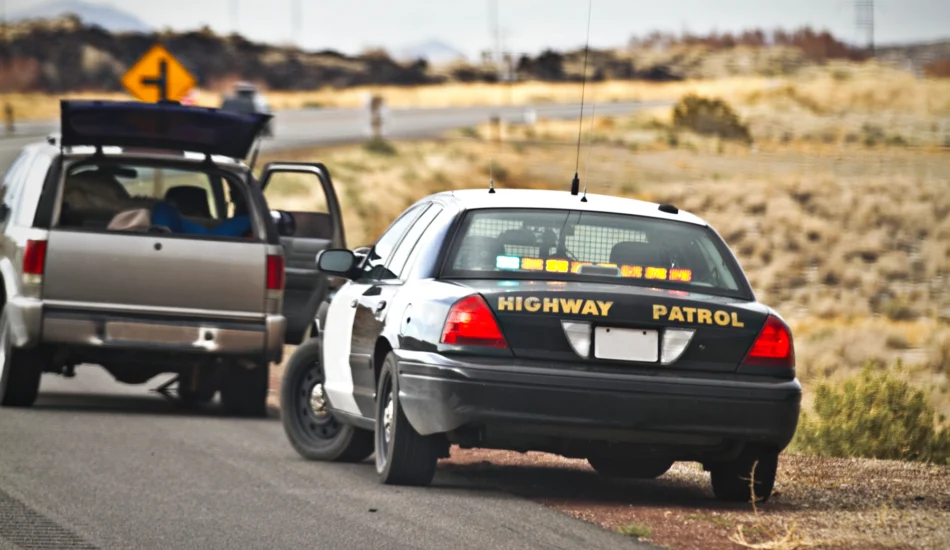
If you were detained by police in Texas, one of the most important questions is whether the officer kept you longer than the law allows. A brief detention is not the same thing as an arrest. But a lawful stop can become unlawful when police extend it without proper legal justification.
I explain this issue to people all the time because many drivers and passengers assume that if an officer says, “You are not under arrest,” everything must still be legal. That is not always true. In real life, the line between a temporary detention and an unlawful arrest can become blurry very fast.
Under the Fourth Amendment, police may briefly detain someone when they have reasonable suspicion of criminal activity. But that detention must stay tied to the reason for the stop. In a traffic stop, that usually means checking a driver’s license, insurance, registration, warrants, and then deciding whether to issue a warning, a citation, or let the person go. The United States Supreme Court has made clear that a traffic stop becomes unlawful if it is prolonged beyond the time reasonably required to complete that mission, and that extending the stop for a dog sniff requires independent reasonable suspicion if that extra step adds time.
What does it mean to be detained by police?
Being detained by police means you are not free to leave, but you have not necessarily been formally arrested.
A detention is supposed to be temporary and purpose-driven. It allows an officer to investigate a specific suspicion for a limited period of time. It is not supposed to become an open-ended fishing expedition.
A simple way to think about it is this:
- A detention is brief and tied to a specific reason
- An arrest is a greater restraint on your freedom and usually requires probable cause
- A stop that lasts too long or becomes too intrusive may cross the line
That distinction is important because the legal remedy can be powerful. Texas courts describe Article 38.23 of the Texas Code of Criminal Procedure as a statutory exclusionary rule, which can prevent illegally obtained evidence from being used in a criminal case.
How long can police detain you in Texas?
There is no universal stopwatch in Texas. The law does not say a detention is legal for exactly 10 minutes or 20 minutes.
Instead, the question is whether police used a reasonable amount of time to confirm or dispel the suspicion that justified the stop in the first place. If an officer finishes the normal tasks related to the stop but continues to hold you for unrelated questioning or to wait for a K-9 without independent legal grounds, that extra delay may be unconstitutional.
That is why these cases are so fact-specific. The timeline matters. The officer’s stated reason matters. What happened before the search matters. What happened after the citation or warning was prepared matters.
When does a detention become an arrest?
A detention can become an arrest when the restraint on your freedom becomes too severe or lasts too long without proper justification.
That can happen when:
- You are placed in the back of a patrol car for more than officer safety or a brief investigation
- Officers keep questioning you after the purpose of the stop has ended
- Police tell you that you are not free to leave for an extended time without developing probable cause
- The stop shifts from handling a traffic issue to searching for evidence without a legal basis
An officer’s label does not control the analysis. If the reality is that a reasonable person would not feel free to leave, and the stop has gone beyond a temporary investigation, a court may treat that encounter as an arrest.
Red flags that you may have been detained by police for too long
Not every stop that feels long is illegal. But certain facts often show up in suppression cases.
- The traffic reason for the stop was already handled
If the officer already collected your documents, checked the basic records, and had enough information to issue a warning or citation, the original purpose of the stop may have been complete.
- The officer starts asking unrelated questions
Questions about where you are coming from, where you are going, who you were with, or what is in the car may seem casual. Sometimes they are. But sometimes they are a sign the officer is trying to stretch the encounter beyond its legal purpose.
- You are asked for consent to search after the stop should have ended
Officers often ask for consent because consent can become a shortcut around warrant and probable cause issues. If the detention was already unlawfully extended, that timing can matter.
- Police say a K-9 unit is on the way
This is a major issue in Texas traffic stop cases. If the dog sniff adds time to the stop and the officer lacks independent reasonable suspicion, that added delay may violate the Fourth Amendment.
- If you are told you are not under arrest, but you are clearly not free to leave
That is one of the biggest red flags. A statement from the officer does not settle the issue. Courts look at what actually happened, not just what the officer called it.
A real-world example of how this happens
Imagine a driver in Sugar Land is stopped for failing to signal a lane change. The officer collects the license and insurance, runs the usual checks, and writes a warning. At that point, the original reason for the stop is basically over.
But instead of ending the encounter, the officer starts asking unrelated questions about travel plans, asks for consent to search the vehicle, and then says a K-9 unit is coming. The driver waits another eight minutes on the roadside. A search follows, and drugs are found.
That fact pattern raises a serious legal issue. If the extra delay was not supported by independent reasonable suspicion, the defense may have a strong argument that the stop was unlawfully prolonged. In the right case, that can lead to suppression of the evidence.
I have seen cases where timelines like this make all the difference. A case that looks strong on paper can weaken quickly when the stop itself does not hold up under constitutional scrutiny. That practical point is also reflected in your transcript, which emphasizes how a few extra minutes can change the outcome of a case.
Timing matters so much in a criminal case
People sometimes assume that if police found evidence, the case is over. That is not how criminal defense works.
How police got the evidence matters. If officers violated the Fourth Amendment or Texas law in the process, the defense may be able to file a motion to suppress. When suppression is granted, the prosecution may lose critical evidence such as:
- Drugs
- Weapons
- Statements made during the stop
- Items found in a vehicle
- Evidence discovered after an unlawful extension of the detention
In some cases, once that evidence is excluded, the government’s case becomes much harder to prove.
What should you do if you were detained by police and something felt off?
If a stop dragged on and you believe police held you longer than necessary, do not assume that detail is minor. It may be one of the most important facts in your case.
Here are practical steps to take:
Write down the timeline right away
Record everything you remember as soon as possible. Include when the stop began, when documents were taken, what questions were asked, whether a citation was issued, when a search happened, and when you were finally allowed to leave or were arrested.
Save anything that helps reconstruct the stop
Keep the citation, warning, bond papers, tow paperwork, dashcam footage, and phone records. Those details can help establish how long the detention actually lasted.
Do not try to explain your way out after the fact
Statements made to police can create additional problems. Let your lawyer review the facts first.
Speak with a criminal defense attorney early
A lawyer can request body camera footage, dash camera video, dispatch records, and reports that may reveal whether the detention was lawfully handled.
Questions people often ask after a stop like this
If I was detained by police but not arrested, can the stop still be illegal?
Yes. A detention can be illegal even if it never becomes a formal arrest. The issue is whether the officer had legal grounds for the stop and whether the detention lasted longer or became more intrusive than the law allows.
Can police keep me there while waiting for a dog?
Not automatically. If waiting for the dog adds time to the stop, police generally need independent, reasonable suspicion to justify that extra delay.
Does being put in the back of a patrol car mean I was arrested?
Not always. Sometimes officers do that briefly for safety reasons. But in other cases, that level of restraint can support the argument that a detention turned into an arrest.
Can evidence be thrown out if the detention lasted too long?
Yes. If the stop was unlawfully prolonged and evidence was found because of that violation, your lawyer may seek suppression of the evidence.
Should I contact a lawyer even if I think the stop was only a few minutes too long?
Yes. In suppression litigation, a few minutes can matter a lot. Small details often decide whether a stop was lawful or unconstitutional.
Why early case review matters
The first version of the police report rarely tells the whole story. Officers may describe a stop in a way that sounds routine and justified. Video, dispatch logs, timestamps, and cross-examination can reveal something very different.
That is why early review matters. If you wait too long, important evidence can be harder to gather and preserve. The sooner a defense lawyer examines the stop, the sooner your legal strategy can focus on whether the detention was lawful, whether the search was valid, and whether any evidence should be challenged.
If you are looking for guidance from a board-certified criminal defense attorney in this area, you can learn more about David Kiatta’s background and experience.
If you were detained by police and the stop felt longer than it should have been, do not brush that off. Reach out to the office of Segura & Kiatta to schedule a consultation.
Contact us
Contact segura & kiatta criminal defense
Schedule Your
Free Consultation
*Required Information
Our Location
Segura & Kiatta, Criminal Defense
345 Commerce Green Blvd
Suite 200
Sugar Land, Texas 77478

Disclaimer: The information you obtain at this site is not, nor is it intended to be, legal advice. You should consult an attorney for advice regarding your individual situation. We invite you to contact us and welcome your calls, letters and electronic mail. Contacting us does not create an attorney-client relationship. Please do not send any confidential information to us until such time as an attorney-client relationship has been established.
© 2026 Segura & Kiatta, Criminal Defense. All rights reserved.
Digital Marketing By 
*Images are obtained under license from Canva and other third-party stock image providers, with attribution included where required.