


- Available 24/7
- 281.570.6400
- call us today!
What a Criminal Defense Lawyer Does Behind the Scenes
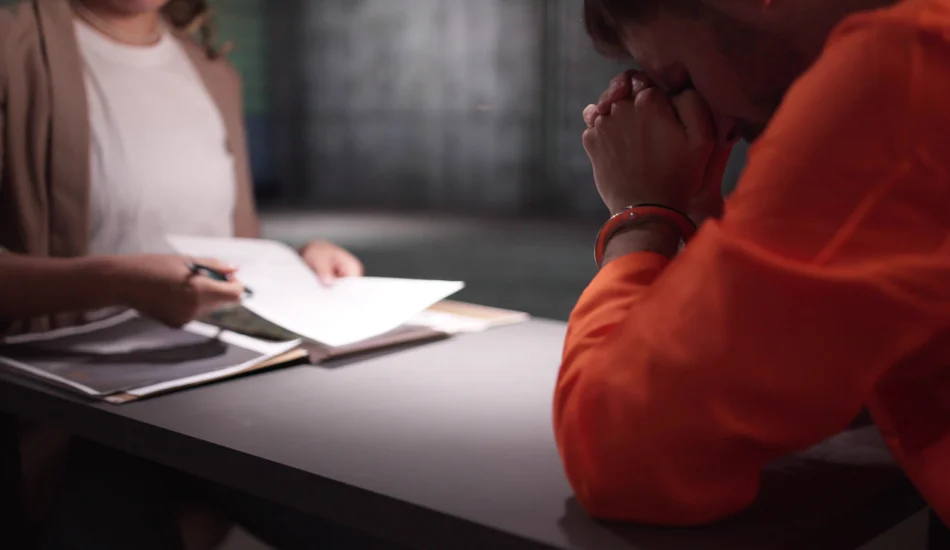
If you’ve ever wondered what a criminal defense lawyer does, the answer is much bigger than standing up in court. In my experience, some of the most important work in a criminal case happens long before a jury is picked, a witness is called, or a judge rules on anything. That core theme also drives your uploaded source material, which focuses on the behind-the-scenes work that shapes whether a case ends in a guilty verdict, a not guilty verdict, or a dismissal.
I approach criminal defense as a proactive process. I am board-certified in criminal law by the Texas Board of Legal Specialization, having practiced criminal law for more than 35 years, and I began my career as a prosecutor in Harris County before building a defense practice focused on serious, high-stakes cases in Sugar Land, Harris County, Fort Bend County, and surrounding areas.
When people ask me what a criminal defense lawyer does, I tell them this: I investigate facts, examine whether law enforcement respected my client’s rights, challenge weak or unreliable evidence, work with experts when needed, and build a strategy designed for the strongest possible outcome. Sometimes that means positioning a case for dismissal. Sometimes it means narrowing the issues before trial. Sometimes it means preparing to fight in front of a jury.
The short answer: a criminal defense lawyer builds the defense before court starts
The simplest answer to what a criminal defense lawyer does is this: a good defense lawyer builds the case before the courtroom battle begins.
That work often includes:
- conducting an independent investigation
- reviewing reports, videos, records, and witness statements
- identifying constitutional violations
- consulting specialists and expert witnesses
- filing targeted pretrial motions
- preparing for negotiation, hearings, or trial
People often picture criminal defense as dramatic courtroom moments. Real defense work is usually much quieter and much more detailed. It is about finding weaknesses in the government’s case before the government gets comfortable with its own version of events. At Segura & Kiatta, our team investigates the facts, reviews the alleged evidence and testimony, and checks whether law enforcement violated constitutional rights or failed to obtain evidence lawfully.
What does a criminal defense lawyer do before trial?
Before trial, I am focused on facts, law, and leverage.
I investigate the case independently
Police reports are not the full story. They are one version of the story. A defense lawyer should not assume the government’s version is complete, accurate, or fair.
That means I may review:
- the scene itself
- surveillance footage
- body camera or dash camera video
- cell phone records
- social media content
- medical records
- witness statements
- prior reports or related records
The goal is not to collect paper for the sake of collecting paper. The goal is to find what matters. Sometimes that means finding a missing detail that changes the timeline. Sometimes it means locating a witness the police ignored. Sometimes it means finding evidence that supports the client rather than the accusation. This might often include scene work, witness interviews, surveillance review, cell phone records, social media, CPS records, and medical records as part of that early defense investigation.
I look for violations of your rights
A big part of the answer to what a criminal defense lawyer does is constitutional review.
If police searched someone illegally, seized evidence unlawfully, questioned someone after the right to counsel attached, or handled evidence improperly, those issues can matter in a very serious way. In Texas, Article 38.23 is the state’s exclusionary rule, and the Texas Court of Criminal Appeals has recognized that it expands on the Fourth Amendment rule by barring unlawfully obtained evidence from being used.
That means this: if the government got evidence the wrong way, that evidence may be challenged and, in the right case, kept out.
I work with experts when the case demands it
Not every case can be understood through a police report alone. Some cases involve forensics. Some involve accident reconstruction. Some involve medicine, mental health, digital evidence, or scientific testing.
That is why defense lawyers sometimes work with:
- private investigators
- cell phone or computer forensic experts
- doctors or nurses
- accident reconstruction specialists
- scientific or technical experts
This is important because the government’s expert is not the final word. Good defense work often involves testing the State’s assumptions and exposing overstatement, weak methodology, or incomplete analysis. When I work on a case, I use private investigators, cell phone forensic experts, doctors, nurses, and accident reconstruction specialists to challenge the government’s version of events.
Strategic motions can change the entire case
Many people do not realize how much of a criminal case can be shaped through motion practice.
If you are still wondering what a criminal defense lawyer does, here is one major answer: I file strategic motions that force the court to confront problems in the State’s case before trial.
That can include:
- motions to suppress evidence from an illegal search or seizure
- motions challenging flawed indictments
- motions attacking the reliability of expert testimony
- motions aimed at limiting or excluding damaging evidence
Cases are not won only by telling a good story at trial. They are often improved by shrinking the government’s evidence, excluding unreliable testimony, or forcing the prosecution to prove something it assumed would go unchallenged.
A real-world example of how this works
Imagine someone in Sugar Land is charged after a late-night traffic stop. The report sounds clean. The officer says the client looked suspicious, searched the vehicle, and found evidence that becomes the center of the prosecution’s case.
If I only react to the report, I am already behind.
But if I investigate early, I may discover that the stop was extended longer than necessary, the search lacked proper legal justification, and the body camera footage does not match key parts of the written report. That can lead to a motion to suppress. If the court agrees the search was unlawful, the evidence itself may be excluded. Once that happens, the prosecution’s case can look very different.
That is why behind-the-scenes work matters. The case you see on paper at the beginning is not always the same case that exists after a full investigation and targeted motion practice.
Why early defense work matters so much in Texas
Early action matters because criminal cases take shape fast.
Witnesses disappear. Videos get overwritten. People forget details. Prosecutors start building confidence in their case. The longer a defense lawyer waits to act, the more opportunities can be lost.
Early and strategic intervention is critical because the right preparation at the outset often determines the trajectory of a case. That is exactly why I do not believe in waiting around for a court date and hoping something good happens.
If you want to understand how preparation affects courtroom decisions, I also break down that process in my article on choosing between a jury trial and a judge trial in Texas, and in my discussion of the Texas jury trial process and the reality of criminal defense.
What a good defense lawyer is really protecting
A criminal case is never just about a file number.
A charge can affect your job, your reputation, your professional future, your family, and your peace of mind. A criminal record can affect future educational and employment opportunities, and emphasizes that clients are not just case numbers.
That is why the answer to what a criminal defense lawyer does is not just “fight charges.” A good defense lawyer protects your rights, your options, and your future position at every stage of the case.
Questions people often ask when they are scared and need answers fast
What does a criminal defense lawyer do if the police violated my rights?
A defense lawyer reviews how the evidence was obtained and whether there are grounds to challenge that evidence through a motion to suppress or other pretrial motion. In Texas, unlawfully obtained evidence can become a major issue under Article 38.23.
Can a criminal defense lawyer investigate my case even if the police already did?
Yes. In fact, that is often essential. A defense investigation can uncover witnesses, records, inconsistencies, or missing facts that the government did not fully explore.
Does a criminal defense lawyer only help if the case goes to trial?
No. A large amount of defense work happens before trial through investigation, legal research, expert consultation, negotiation, and motion practice. That early work often shapes whether a case is reduced, dismissed, or tried.
Can a criminal defense lawyer challenge scientific evidence?
Yes. Depending on the case, the defense can challenge the reliability, relevance, or methodology behind expert opinions and alleged scientific evidence.
When should I contact a criminal defense lawyer?
As early as possible. My contact page invites people to schedule a free consultation, and the firm’s materials consistently stress that early action matters. Waiting can make it harder to preserve evidence and build leverage.
The work you do not see is often what protects you most
When people ask what a criminal defense lawyer does, they are usually thinking about arguments in court. But the deeper answer is that the real defense often starts long before anyone rises to speak in front of a judge.
It starts with an investigation. It grows through legal analysis. It gets stronger through strategic motions, expert review, and early preparation. And in the right case, that work can be the difference between a conviction and a far better outcome.
If you want to learn more about my background and approach, you can review my attorney profile.
Get ahead of the case before the government does
If you have been charged with a crime or you are under investigation in Sugar Land, Harris County, Fort Bend County, or the surrounding area, the time to protect yourself is early.
The sooner I can begin reviewing the facts, preserving evidence, and evaluating whether your rights were violated, the more options we may have. You can reach out through the firm’s contact page to schedule a consultation.
Contact us
Contact segura & kiatta criminal defense
Schedule Your
Free Consultation
*Required Information
Our Location
Segura & Kiatta, Criminal Defense
345 Commerce Green Blvd
Suite 200
Sugar Land, Texas 77478

Disclaimer: The information you obtain at this site is not, nor is it intended to be, legal advice. You should consult an attorney for advice regarding your individual situation. We invite you to contact us and welcome your calls, letters and electronic mail. Contacting us does not create an attorney-client relationship. Please do not send any confidential information to us until such time as an attorney-client relationship has been established.
© 2026 Segura & Kiatta, Criminal Defense. All rights reserved.
Digital Marketing By 
*Images are obtained under license from Canva and other third-party stock image providers, with attribution included where required.