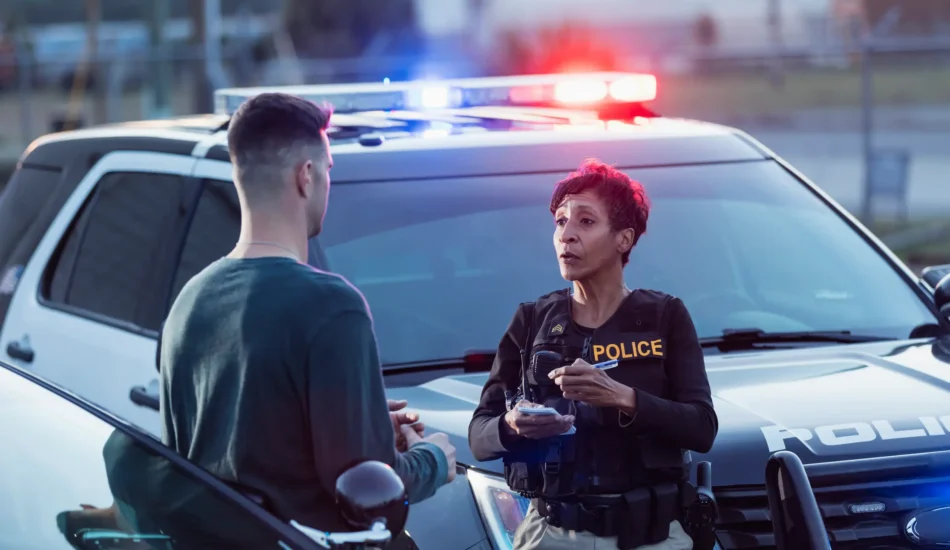
If you are stopped for a suspected DWI in Texas, avoid trying to explain your character, your stress, your personal problems, or why you were drinking. Statements such as “I’m not a bad person,” “I’ve been under a lot of stress,” or “I never do this” may feel harmless in the moment, but they can give the officer and prosecutor additional information to use when building the case.
I understand why people say these things.
A DWI investigation is stressful. People start thinking about their spouse, children, job, reputation, driver’s license, and everything that may happen next. They want the officer to understand that the person standing on the roadside at 1:00 in the morning does not represent who they are every day.
The problem is that a roadside DWI investigation is focused on evidence.
Why can saying “I’m not a bad person” hurt a DWI case?
The phrase itself is usually not the biggest problem.
What comes next often matters more.
Someone says, “Officer, I’m not a bad person,” and then begins explaining:
“Work has been stressful.”
“My marriage has been difficult.”
“I have had a terrible week.”
“I normally do not drink this much.”
“This is the first time I have ever done something like this.”
“I was just trying to get home.”
The person may be asking for understanding.
The officer may hear admissions about alcohol consumption, emotional state, timing, or behavior.
A prosecutor may later use those statements to create a timeline explaining why the person drank, how much they may have consumed, or what their state of mind was before driving.
That is why understanding what not to say during a DWI stop in Texas can be just as important as understanding the breath or blood test.
Can police use things you say before you are arrested?
Potentially, yes.
A common misconception is that nothing you say can be used unless police first read you your Miranda rights.
Routine roadside traffic stops do not automatically trigger Miranda warnings. Statements made during the roadside portion of a DWI investigation may become evidence even though the officer has not yet read Miranda warnings.
This makes casual conversation more important than many drivers realize.
An officer may ask:
Where are you coming from?
Have you been drinking?
How many drinks did you have?
When was your last drink?
Why are your eyes red?
Why are you nervous?
Where are you going?
Some questions may sound conversational.
They may also be part of the investigation.
What are you actually required to tell police during a Texas traffic stop?
Texas drivers should cooperate with lawful instructions and provide required identifying information.
You should provide your driver’s license when required and comply with basic identification requirements that apply during a lawful detention or arrest.
You generally do not need to explain your entire evening, justify why you drank, discuss your personal stress, or try to convince the officer that you deserve mercy.
There is an important difference between cooperating and volunteering evidence.
You can remain calm.
You can be respectful.
You can follow lawful instructions.
You can provide required identification.
You do not need to turn the traffic stop into a detailed discussion about your personal life.
Why emotional explanations are risky during a DWI investigation
Body camera footage does not capture what you meant in your heart.
It captures what you said.
It captures how you said it.
It captures your tone, pauses, movements, and emotional state.
Imagine someone says:
“I’ve been going through a really difficult divorce. Work has been awful, and I just needed a few drinks tonight.”
That person may believe they are explaining why they seem emotional.
A prosecutor may hear something different:
The driver admitted drinking because of emotional stress.
Now imagine the person later disputes how much alcohol they consumed.
The State may point back to the roadside statement and argue that the driver’s own words support the officer’s suspicion.
That is how an attempt to humanize yourself can accidentally become part of the evidence.
What should you say during a DWI stop?
Keep your communication respectful and limited.
You can respond to required identification requests and lawful instructions without offering a detailed explanation of the events leading up to the stop.
You should avoid arguing.
You should avoid becoming confrontational.
You should avoid trying to persuade the officer that you are a good person.
If you have important information about your background, employment, family, community involvement, or personal circumstances, there may be an appropriate time for your lawyer to present that information later.
The roadside is usually not that time.
What if the officer asks why you were drinking?
You do not need to create an explanation designed to make yourself sound more sympathetic.
People sometimes believe saying they drank because of stress sounds better than simply admitting they had a drink.
It can actually give the government more context.
The same is true when someone says:
“I hardly ever drink.”
“This was a special occasion.”
“I only had a couple because I had a rough day.”
“I know I should not have driven.”
Every statement should be evaluated in context, but the general rule is straightforward: do not volunteer explanations that the officer did not already have.
Why the body camera can become important in a DWI defense
Body camera footage can be one of the most useful pieces of evidence in a DWI case.
It may show:
how you spoke
how you walked
how quickly you responded to questions
whether the officer accurately described your behavior
what you actually said
what questions the officer asked
whether instructions were clear
what happened during field sobriety testing
The police report is the officer’s written description of the encounter.
The video lets the defense compare that description against what actually happened.
That comparison can matter.
If the officer describes someone as confused, emotional, or unable to communicate clearly, but the video shows a calm person answering questions appropriately, that difference may become important.
The reverse is also true.
That is why I want to review the actual footage before deciding what any statement means.
Can a DWI case have problems before the breath or blood result matters?
Yes.
The government’s case begins before any chemical test.
The officer must first have a lawful basis for the traffic stop and later develop sufficient grounds for the DWI investigation and arrest.
That means I examine the encounter from the beginning.
whether body camera footage supports the officer’s report
your statements
breath or blood evidence
whether the State can prove intoxication
The fact that you were arrested does not answer all of those questions.
What if you already said too much?
Do not panic.
People make statements during DWI stops all the time.
One statement does not automatically decide the case.
Your lawyer needs to review exactly what you said, what question prompted the statement, the context surrounding it, and how the rest of the evidence looks.
A statement that sounds damaging in a police report may look very different when the full body camera video is reviewed.
That is why context matters.
Do not try to correct the situation by calling the officer, prosecutor, or witnesses and providing more explanations.
Talk with your lawyer first.
Questions People Ask About Talking During a Texas DWI Stop
Do I have to answer questions about how much I drank?
You generally should provide the information Texas law requires during a lawful traffic stop, such as your driver’s license and required identifying information. You do not have to volunteer a detailed explanation about alcohol consumption simply because the officer asks conversational questions.
Can police use what I say before they read me my rights?
Potentially, yes. Ordinary roadside traffic questioning does not automatically require Miranda warnings. Statements made during that portion of the investigation may still become evidence.
Should I tell the officer I am normally a responsible person?
Trying to prove your character during a roadside investigation usually does not help answer whether the State can prove DWI. Personal explanations can also lead to additional statements about drinking, stress, or the events before the stop.
What if the officer keeps asking me questions?
Stay respectful and calm. Provide information you are legally required to provide, but you do not need to turn the stop into a detailed discussion about your personal life or your defense.
Can something I said ruin my entire DWI case?
A statement can affect the evidence, but no single fact should be evaluated in isolation. A defense lawyer should review the statement alongside the stop, video, officer observations, field sobriety testing, and any breath or blood evidence.
Why early review of the DWI evidence matters
If you have been arrested, I want to review the actual evidence before deciding how strong the State’s case is.
That includes your statements.
It also includes everything that happened before and after them.
A DWI case may look very different after reviewing body camera footage than it did from reading the report alone.
If you are facing more serious allegations or have prior DWI convictions, the potential consequences also change significantly. Our article on what happens after a third DWI in Texas explains some of the additional issues that can arise in felony DWI cases.
You can also review some of our DWI and criminal case results to see examples of the kinds of matters we have handled. Every case is different, and prior outcomes do not guarantee a particular result.
What should you remember during a Texas DWI stop?
If you remember one thing about what not to say during a DWI stop in Texas, remember this:
You do not need to prove that you are a good person on the side of the road.
Stay calm.
Be respectful.
Follow lawful instructions.
Provide information you are legally required to provide.
Avoid turning fear or embarrassment into a long explanation about your life, your stress, or why you were drinking.
Those personal facts can be addressed later, in the right setting, with the help of your lawyer.
Get clear answers after a DWI arrest
If you are facing a DWI charge in Sugar Land, Fort Bend County, Harris County, or the surrounding area, do not assume that something you said on body camera determines the entire case.
I can review the stop, your statements, the field sobriety testing, the officer’s report, and any breath or blood evidence to help you understand what you are actually facing.
The goal is to understand the evidence first and then determine the best way forward.
About the author: Anthony R. Segura
Managing Attorney of Segura & Kiatta, Criminal Defense
Anthony R. Segura is the Managing Attorney of Segura & Kiatta LLP in Sugar Land, Texas. He focuses his practice on criminal defense and DWI defense. Licensed by the State Bar of Texas since 1994, Mr. Segura brings decades of courtroom experience to the firm and has led Segura & Kiatta LLP since 2006. He earned his Juris Doctor from South Texas College of Law and represents clients across the Sugar Land area with practical, straightforward legal guidance.