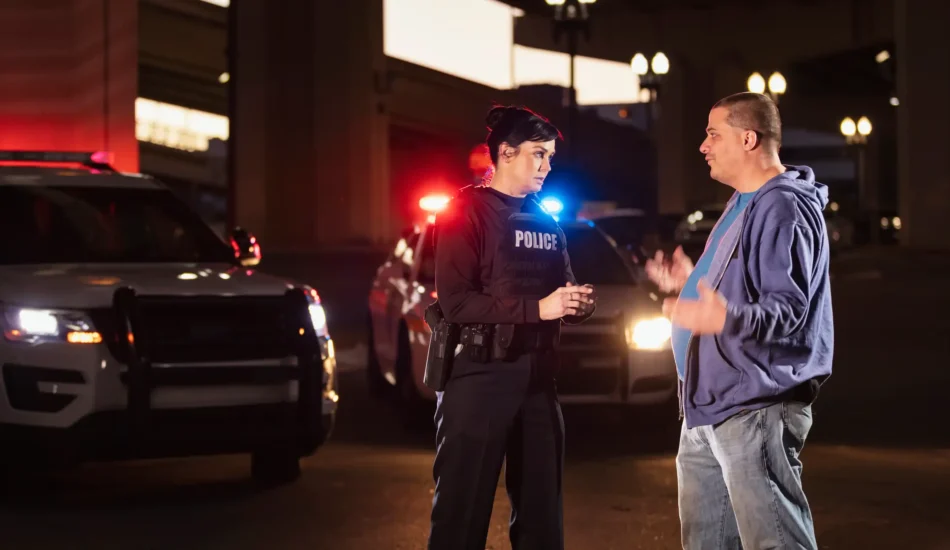
No. Name dropping during a DWI stop generally does not give you any legal advantage, change whether the officer has reasonable suspicion or probable cause, or make evidence of intoxication disappear. Telling an officer that your relative is a cop, that you know the sheriff, or that another officer can vouch for you may actually make the roadside interaction more awkward and lead to more unnecessary talking.
I understand why people do it.
They are nervous. They are embarrassed. They want the officer to understand that they are responsible, respectable people who happen to know someone in law enforcement.
The problem is that a DWI investigation is focused on evidence, not your personal connections.
When I review body camera footage, I am interested in what actually happened during the stop. Who you know does not change the legal questions that determine whether the officer had grounds to stop, investigate, or arrest you.
What does name dropping during a DWI stop usually sound like?
It usually starts casually.
Someone says:
“My grandfather was a police officer.”
“I go to church with the sheriff.”
“My cousin is a cop.”
“Can you call Officer Smith? He knows me.”
“I have a lot of friends in law enforcement.”
The person usually has a simple goal.
They want to communicate, “I am not a criminal. I respect police. I am a good person.”
That message may feel completely different when it appears on body camera footage.
An officer may hear it as a request for special treatment.
Now the officer knows that every decision they make could later be questioned. If they give you a break, someone could ask whether they treated you differently because of your connection to law enforcement.
That can make the officer more careful, formal, and focused on documenting every step of the investigation.
Can knowing a police officer change whether you get arrested for DWI?
Your personal relationships do not change the legal standards governing a DWI investigation.
An officer’s decision should depend on the facts and evidence available during the encounter.
That may include:
the reason for the initial traffic stop
driving behavior
odor of alcohol
your speech and coordination
statements you make
observations recorded on body camera
field sobriety testing
breath or blood evidence
Knowing a police officer does not remove reasonable suspicion.
Knowing the sheriff does not erase probable cause.
Having a relative in law enforcement does not change whether the State believes it has evidence of intoxication.
That is why trying to rely on a connection usually misses the real issue.
Why can name-dropping make the officer more formal?
Put yourself in the officer’s position.
A driver suddenly mentions that they know the sheriff or have a family member who works in law enforcement.
Now the officer has another concern.
They may start thinking about how the interaction will look later if the video is reviewed by supervisors, prosecutors, defense attorneys, or another law enforcement agency.
The officer may become especially careful about appearing fair and impartial.
That does not mean every officer reacts the same way. Every traffic stop is different.
It does mean there is no reason to assume mentioning a connection will make the investigation easier.
The exact opposite can happen.
Why does name dropping often lead to more damaging conversation?
This may be the bigger problem.
Name dropping during a DWI stop rarely ends with one sentence.
Someone says, “My cousin is a police officer.”
Then they keep talking.
“I know how this works.”
“I only had two drinks.”
“I couldn’t pass these tests even if I was sober.”
“Don’t you guys have anything better to do?”
Now the conversation has moved far beyond mentioning a police connection.
The driver has started volunteering statements about alcohol, sobriety testing, their attitude toward the investigation, and what they believe happened.
Each additional statement gives the officer more information to document.
That is why my advice during a DWI investigation is usually much simpler: be boring.
What does “be boring” mean during a Texas DWI stop?
It means you do not need to create a memorable roadside performance.
Stay calm.
Stay respectful.
Provide your driver’s license and required documentation.
Follow lawful instructions.
Avoid arguing.
Avoid trying to impress the officer.
Avoid explaining your entire night.
Avoid relying on personal connections.
That approach gives you much less opportunity to accidentally create additional evidence.
Does the officer have to care that you know law enforcement?
No.
A police officer conducting a DWI investigation is supposed to make decisions based on the circumstances of the stop rather than a driver’s social or professional connections.
For example, imagine an officer observes a vehicle weaving and makes a traffic stop in Fort Bend County.
The driver tells the officer:
“My brother is a police officer in Houston. Can I call him?”
That does not answer the questions relevant to the stop.
The officer will still evaluate the driving behavior, observations made after approaching the car, statements from the driver, and any other evidence developed during the investigation.
The driver’s connection may mean something personally.
Legally, it does not erase the evidence.
Can the body camera make a name drop look worse than you intended?
Yes.
Body camera footage captures words, tone, timing, and behavior.
It does not automatically capture your intentions.
You might be trying to say:
“I respect law enforcement.”
The prosecutor could interpret the same conversation as:
“The driver attempted to use a law enforcement connection to receive special treatment.”
Whether that characterization is fair depends on the actual video and context.
This is why I review the footage rather than relying solely on the police report.
The words used in a report can make a conversation sound very different from what happened in real time.
What if you already mentioned someone in law enforcement?
Do not panic.
A name drop does not determine whether you are guilty of DWI.
It is one small piece of a much larger encounter.
The defense still needs to examine:
why you were stopped
whether the detention was lawful
what the officer observed
what you actually said
how field sobriety tests were performed
whether the video matches the report
any breath or blood testing
whether the State can prove intoxication
Context matters.
If you already made statements on body camera, do not try to repair the situation by contacting the officer and explaining yourself further.
Let your lawyer review the evidence first.
What should you do instead of trying to use a police connection?
Focus on the things you can control.
Be polite.
Stay calm.
Avoid unnecessary conversation.
Follow lawful instructions.
Do not assume that an acquaintance, relative, or friend in law enforcement can make the investigation disappear.
If there is a legal problem with what the officer did, that issue can be investigated afterward.
For example, if the stop began near your home, our article on whether police can pull you over in your driveway in Texas explains why getting home does not create a legal safe zone and why trying to extend the drive can create additional problems.
Why the beginning of the DWI investigation still matters
A DWI case should be reviewed from the first moment the officer made contact with the vehicle.
I want to know:
Why did the officer stop the driver?
What did the officer observe?
When did the officer begin investigating DWI?
What statements did the driver make?
Did the officer properly administer any field sobriety tests?
What does the video actually show?
What happened before any breath or blood sample was obtained?
Those questions matter much more than whether you know a police officer.
The government’s case has to stand on evidence.
A practical example of how name dropping can backfire
Imagine someone in Sugar Land gets stopped after leaving dinner.
The officer begins asking questions.
The driver becomes nervous and says:
“My uncle is a lieutenant. You can call him. He knows I am not the kind of person who drives drunk.”
The officer continues the investigation.
The driver gets frustrated and keeps talking:
“I only had two drinks.”
“I know how these stops work.”
“My uncle said these tests are not reliable anyway.”
What started as a request for understanding has now created several recorded statements.
The prosecutor may later focus on the admission about drinking rather than the driver’s relationship with the lieutenant.
That is the risk.
The connection did not remove evidence.
The conversation may have created more of it.
Questions People Ask About Name Dropping During a DWI Stop
Can knowing a police officer get me out of a DWI?
You should not expect a personal law enforcement connection to affect whether an officer investigates or arrests you. The legal analysis should depend on the evidence and circumstances of the stop.
Should I tell the officer my family member works in law enforcement?
There is generally no legal benefit to volunteering that information during a DWI investigation. It may also create an awkward situation where the officer becomes especially concerned about appearing impartial.
Can something I say casually during a DWI stop be used against me?
Potentially, yes. Statements made during a roadside investigation can become part of the evidence, depending on the circumstances.
Do I have to answer every question an officer asks?
Texas drivers have obligations such as presenting a driver’s license when required, but Texas DPS guidance states that people cannot be punished simply for refusing to answer investigative questions during a traffic stop. The specific circumstances of each encounter still matter.
What if the officer handled the DWI stop incorrectly?
Let your lawyer investigate it. The legality of the stop, detention, field sobriety testing, arrest, and breath or blood evidence can all be reviewed after the fact.
Why body camera review matters after a DWI arrest?
Police reports summarize what officers believe happened.
Body camera footage gives us another source.
I want to compare them.
Did the driver’s speech sound the way the report describes?
Did the officer give clear instructions?
What exactly did the driver say?
How long did the encounter last?
Did the officer interpret something differently from how it appears on video?
A DWI defense should be based on the actual evidence rather than assumptions about what happened.
You can review some of our DWI and criminal case results to see examples of matters we have handled. Every case depends on its own facts, and previous outcomes do not guarantee a particular result.
What should you remember about name dropping during a DWI stop?
Keep it simple.
Name dropping during a DWI stop does not change whether the officer has lawful grounds to investigate you or whether the State has evidence of intoxication.
Mentioning police connections can create awkwardness and often leads people into longer conversations that provide officers with additional information.
You do not need a roadside reference.
You do not need to prove your social standing.
You do not need to convince the officer that you are respectable.
Stay calm, stay polite, follow lawful instructions, and save the legal arguments for your attorney.
Get straightforward answers after a Texas DWI arrest
If you are dealing with a DWI charge in Sugar Land, Fort Bend County, Harris County, or the surrounding area, the important question is what the evidence actually shows.
I can review the traffic stop, body camera footage, your statements, field sobriety testing, and any breath or blood evidence to help you understand what you are facing and what options may be available.
A DWI arrest can feel overwhelming. The next step is to understand the evidence and make informed decisions about what comes next.
About the author: Anthony R. Segura
Managing Attorney of Segura & Kiatta, Criminal Defense
Anthony R. Segura is the Managing Attorney of Segura & Kiatta LLP in Sugar Land, Texas. He focuses his practice on criminal defense and DWI defense. Licensed by the State Bar of Texas since 1994, Mr. Segura brings decades of courtroom experience to the firm and has led Segura & Kiatta LLP since 2006. He earned his Juris Doctor from South Texas College of Law and represents clients across the Sugar Land area with practical, straightforward legal guidance.