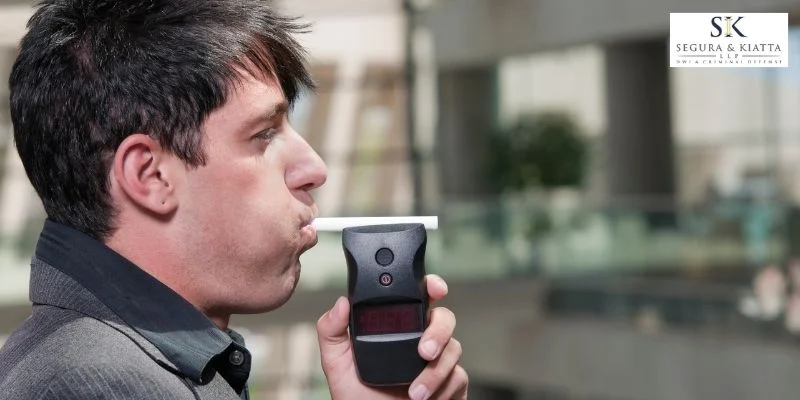
A Fort Bend County DWI case can fall apart before anyone looks at the breath or blood number, because that number only matters if the stop and arrest that produced it were lawful. Texas law keeps out evidence gathered through an illegal stop, and that includes the chemical test result along with everything the officer wrote down.
Every DWI case starts the same way: with red and blue lights, not a lab result. That decision, not the breath machine or the lab, is the first thing a defense lawyer examines, because Texas Code of Criminal Procedure Article 38.23 keeps out evidence obtained by breaking the law to get it.
If the arresting officer had no lawful reason to stop your car in Sugar Land or anywhere else in Fort Bend County, the stop itself becomes the problem, and everything gathered after it — the smell of alcohol, the swaying, the printout — can be challenged as the product of that first mistake.
What Officers Need Before They Can Detain You in Fort Bend County?
Reasonable suspicion is a low bar, but it isn’t zero. An officer needs specific, describable facts, not a feeling, before pulling you over or extending a stop into a full DWI investigation backed by probable cause. Two moments tend to separate a strong defense from a weak one.
The Traffic Violation
Weaving inside your own lane, a burned-out taillight, or rolling through a stop sign can justify a stop on its own. The officer still has to describe it clearly on the stand later, not just note it in a box on the report.
The Escalation
Once you’re stopped, the officer needs new and separate reasons, glassy eyes, slurred words, an open container, before ordering you out for field tests. A stop for a cracked windshield doesn’t turn into a DWI investigation on its own.
When a Passed or Failed Field Test Doesn’t Settle Anything?
The defense files the motion, naming exactly which law or right the stop violated.
A judge holds a hearing at the Fort Bend County Justice Center, usually months before trial, where the officer testifies under oath.
If the judge agrees the stop or arrest broke the law, the breath or blood alcohol concentration result, along with the officer’s observations, can be kept out before a jury ever hears the case. And this fight runs on a separate clock.
Can my DWI case be dismissed if the officer had no reason to stop me?
Often, yes, but not automatically. If the stop wasn’t lawful, the evidence gathered after it — including the breath or blood test — can be thrown out under Texas law. Once that evidence is gone, the state’s case is often too weak to continue, and prosecutors may reduce or drop the charge. But suppression of evidence and dismissal of a case are two different steps, and the second one isn’t guaranteed.
Do I still need a lawyer if I already failed the breath test?
You do, because the result only counts if the stop and arrest behind it were lawful. A failed test tied to an illegal stop can still get suppressed before trial ever starts. Waiting to see how bad the number looks just shrinks the time your lawyer has to review the stop.
What’s the 15-day deadline everyone mentions after a DWI arrest?
That’s your window to request a license hearing with the state before an automatic suspension kicks in. Miss it, and the suspension takes effect on the 40th day no matter what happens in the criminal case. Call a lawyer within days, not weeks, to protect the license and the case together.
How long does a motion to suppress take in a Fort Bend County case?
It varies, but the hearing is usually set months before trial, which gives your lawyer time to lock in the officer’s testimony early. Some hearings wrap up in an afternoon; others run longer when the officer disputes the defense’s account. Either way, the ruling shapes everything that happens next.
Segura & Kiatta, Criminal Defense: Your Fort Bend County DWI Law Firm
A breath or blood number feels final, and that’s the reaction the state counts on. It isn’t the whole case, and it often isn’t the strongest piece of it.
Anthony Segura has spent 31 years picking apart DWI stops in Fort Bend County, and David Kiatta spent years building cases as a Harris County prosecutor before he started taking them apart from the defense side. Between the two of them, they know what a clean stop looks like, and what one that won’t survive a hearing looks like too.
Contact our firm today, and let them read your stop before anyone assumes the number is the end of the story.
About the author: Anthony R. Segura
Managing Attorney of Segura & Kiatta, Criminal Defense
Anthony R. Segura is the Managing Attorney of Segura & Kiatta LLP in Sugar Land, Texas. He focuses his practice on criminal defense and DWI defense. Licensed by the State Bar of Texas since 1994, Mr. Segura brings decades of courtroom experience to the firm and has led Segura & Kiatta LLP since 2006. He earned his Juris Doctor from South Texas College of Law and represents clients across the Sugar Land area with practical, straightforward legal guidance.